
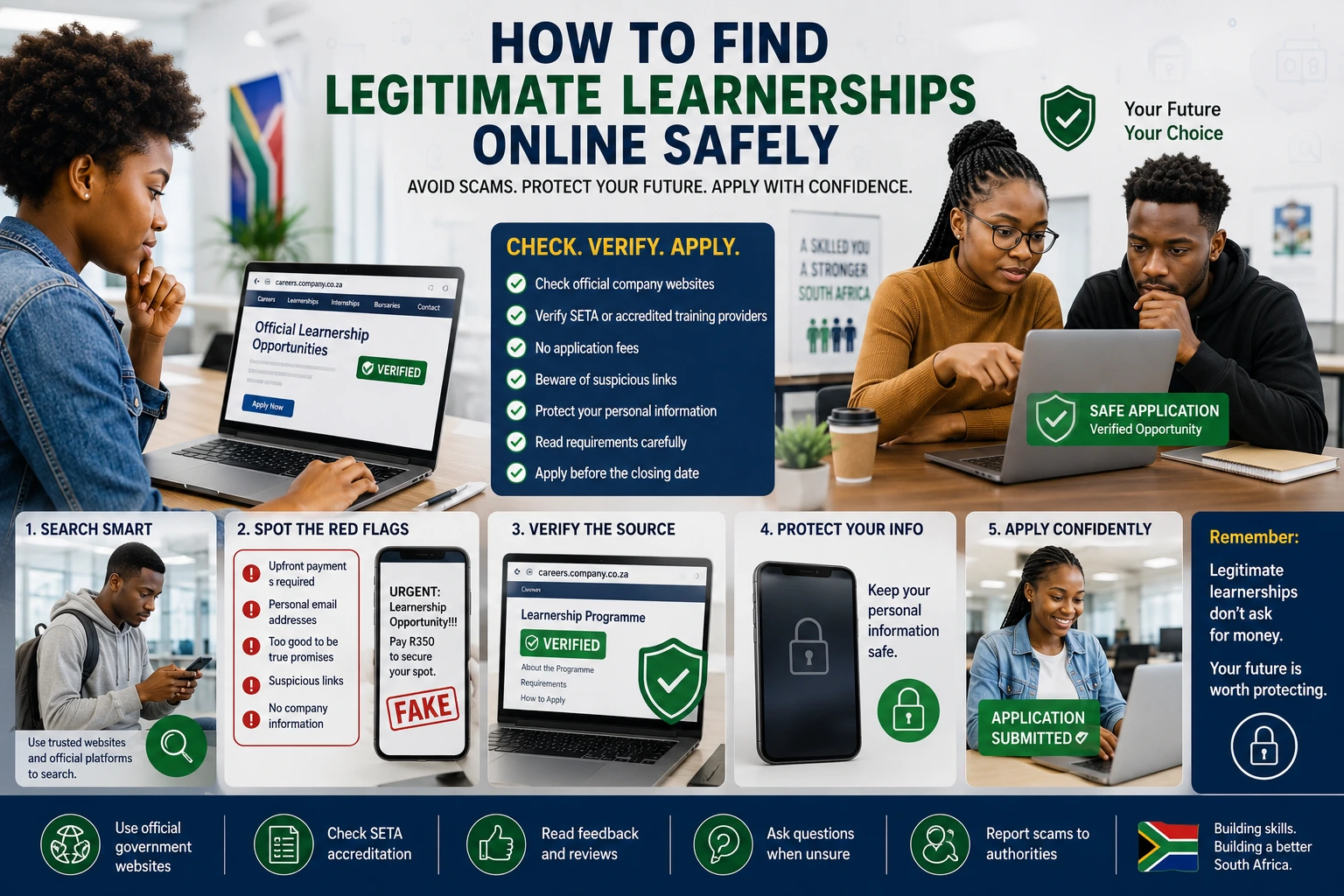
Learn how to find legitimate learnerships online in South Africa in 2026. Discover warning signs of fake opportunities, trusted application methods, and expert tips to avoid online learnership scams.
South Africa’s digital job market has changed dramatically over the past few years. Thousands of unemployed young people now search for internships, bursaries and learnership opportunities online instead of relying on newspapers or physical noticeboards. While this shift has improved access to opportunities, it has also created a dangerous environment where fake learnership adverts and online scams continue targeting desperate job seekers.
The problem has become increasingly serious in 2026 as scammers exploit social media platforms, WhatsApp groups and unofficial websites to spread misleading recruitment advertisements. Many young applicants unknowingly submit personal documents, pay fake application fees or share sensitive information with fraudulent operators pretending to represent major companies or government programmes.
This is why understanding how to find legitimate learnerships online has become an essential skill rather than just useful advice.
For many South Africans, learnerships represent one of the few realistic pathways into employment because they combine accredited training with workplace experience. However, the growing number of fake opportunities means applicants must now approach online job searching with greater caution and verification practices.
The ability to distinguish between legitimate and fraudulent learnerships could protect not only your personal information but also your future career prospects.
ALSO APPLY FOR Learner Radiation Protection Officer Internship 2026: Why This Rare Nuclear Safety Opportunity Matters
ALSO READ Top Industries Offering Learnerships in South Africa: Where the Real Opportunities Are in 2026
Quick Facts About Find Legitimate Learnerships Online
| Item | Details |
|---|---|
| Topic | How to Find Legitimate Learnerships Online |
| Primary Focus | Learnership verification and scam prevention |
| Location | South Africa |
| Programme Duration | Varies by learnership |
| Positions Available | Not stated in the official advert |
| Closing Date | Varies by programme |
| Reference Number | Not stated in the official advert |
| Stipend | Depends on the official learnership |
| Required Gender | Not stated in the official advert |
| Company Name | Multiple organisations and employers |
Why Learnership Scams Are Increasing in South Africa-Find Legitimate Learnerships Online in South Africa
The rise in online learnership scams is closely connected to South Africa’s unemployment crisis. With millions of young people actively searching for opportunities, scammers understand that desperation and urgency often reduce caution.
Fraudsters frequently exploit: Find Legitimate Learnerships Online in South Africa
- High youth unemployment
- Limited digital literacy
- Social media misinformation
- Fake urgency tactics
- Poor verification habits
In many cases, fake adverts imitate real organisations by copying logos, branding and official language from legitimate companies. Some even create convincing websites or social media pages that appear authentic at first glance.
Scammers also understand how emotionally powerful learnership opportunities can be. Programmes linked to large employers, SETAs, banks, retail groups or government departments often attract thousands of applications within days.
As a result, fraudulent advertisements can spread rapidly online before being identified or removed.
The increasing sophistication of these scams means applicants must go beyond simply reading an advert carefully. Verification now requires active research and critical evaluation.
Always Verify Learnerships Through Official Company Platforms
One of the safest ways to find legitimate opportunities is by checking whether the learnership appears on the organisation’s official website or verified social media channels.
Many fake learnership advertisements circulate independently through: Find Legitimate Learnerships Online in South Africa
- WhatsApp forwards
- Facebook groups
- Telegram channels
- TikTok videos
- Unofficial recruitment blogs
While some of these sources may share genuine opportunities, applicants should never rely solely on reposted content.
A legitimate learnership is usually supported by: Find Legitimate Learnerships Online in South Africa
- An official careers portal
- A verified company website
- Corporate email addresses
- Official government communication
- Recognised recruitment systems
For example, if an advert claims a major retailer or bank is recruiting learnership applicants, candidates should visit the organisation’s official careers page directly instead of applying through suspicious links.
One important warning sign is the use of personal email addresses such as: Find Legitimate Learnerships Online in South Africa
- Gmail
- Yahoo
- Outlook
- Hotmail
Large companies and government departments generally use corporate email domains connected to their organisation.
Verification through official platforms remains one of the strongest protections against fraud.
Learnerships That Request Payment Are Usually Fraudulent
A major red flag in South Africa’s recruitment environment is any learnership demanding payment from applicants.
Legitimate learnership programmes do not require candidates to pay:
- Registration fees
- Interview fees
- Assessment fees
- Placement fees
- Training activation fees
Scammers often create false urgency by claiming:
- “Only limited spaces remain”
- “Payment secures your placement”
- “Processing fees are compulsory”
These tactics specifically target vulnerable job seekers afraid of missing opportunities.
In reality, most credible employers and SETA-supported programmes fully cover recruitment costs themselves. Applicants should therefore become immediately cautious if money is requested at any stage before selection.
Even small payment requests can indicate fraudulent intent.
The financial impact of these scams is especially damaging because many unemployed youth already face economic hardship. Beyond financial loss, victims may also unknowingly expose personal identity documents to criminal misuse.
Understanding the Role of SETAs and Accredited Training Providers-Find Legitimate Learnerships Online in South Africa
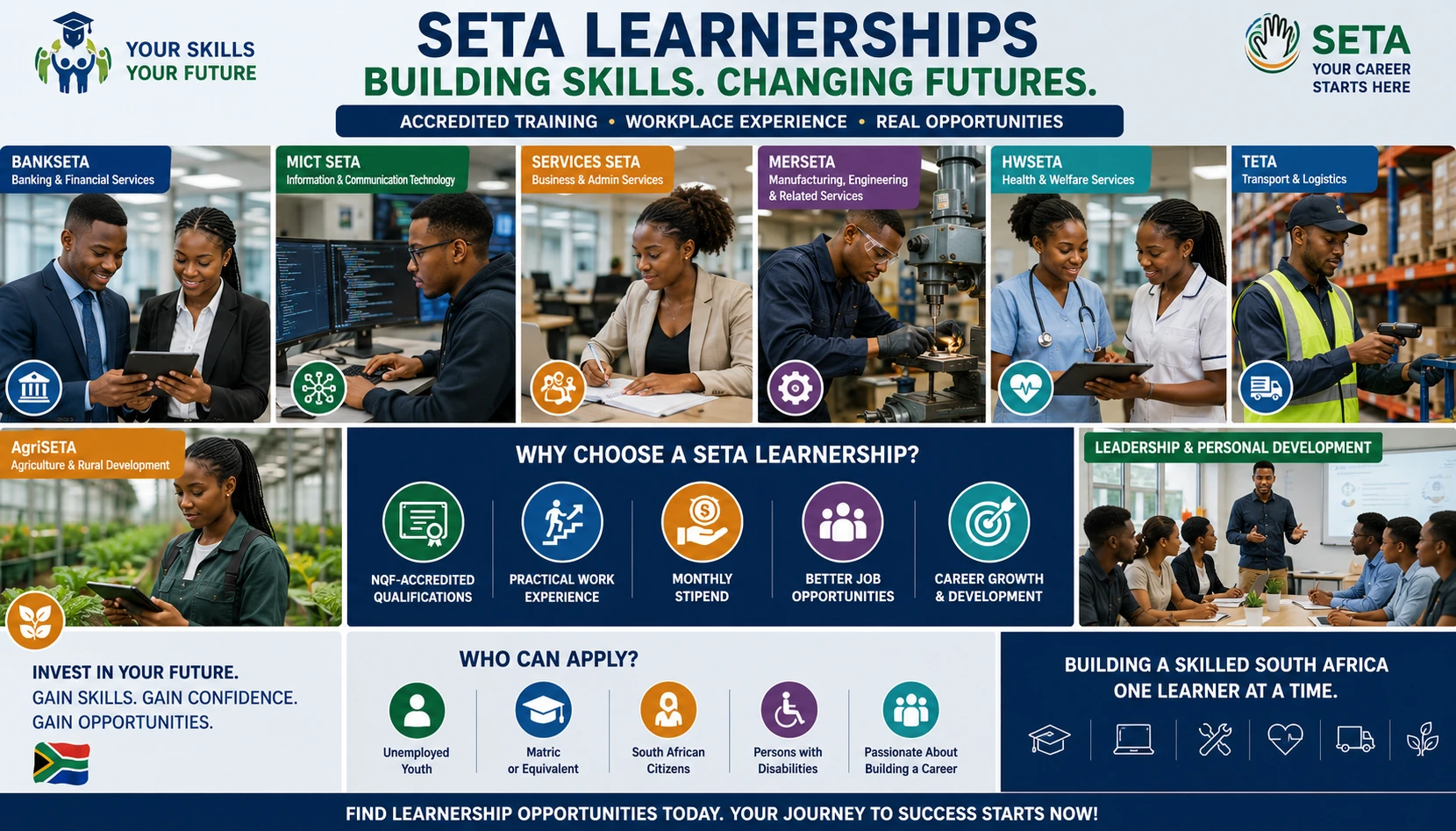
One of the most effective ways to identify legitimate learnerships online is by understanding how South Africa’s skills development system operates.
Many official learnerships are connected to: Find Legitimate Learnerships Online in South Africa
- Sector Education and Training Authorities (SETAs)
- TVET colleges
- Accredited training providers
- Registered employers
SETAs play a central role in funding and regulating occupational training programmes across industries such as: Find Legitimate Learnerships Online in South Africa
- Banking
- Retail
- Logistics
- Manufacturing
- Information technology
- Healthcare
Because accredited learnerships usually align with recognised qualifications, applicants should check whether:
- The training provider is registered
- The qualification is accredited
- The NQF level is specified
- The programme references SETA partnerships
Fraudulent adverts often avoid detailed accreditation information because scammers lack legitimate institutional backing.
Candidates who familiarise themselves with South Africa’s training framework are generally better equipped to identify suspicious opportunities.
Social Media Has Become Both Helpful and Dangerous
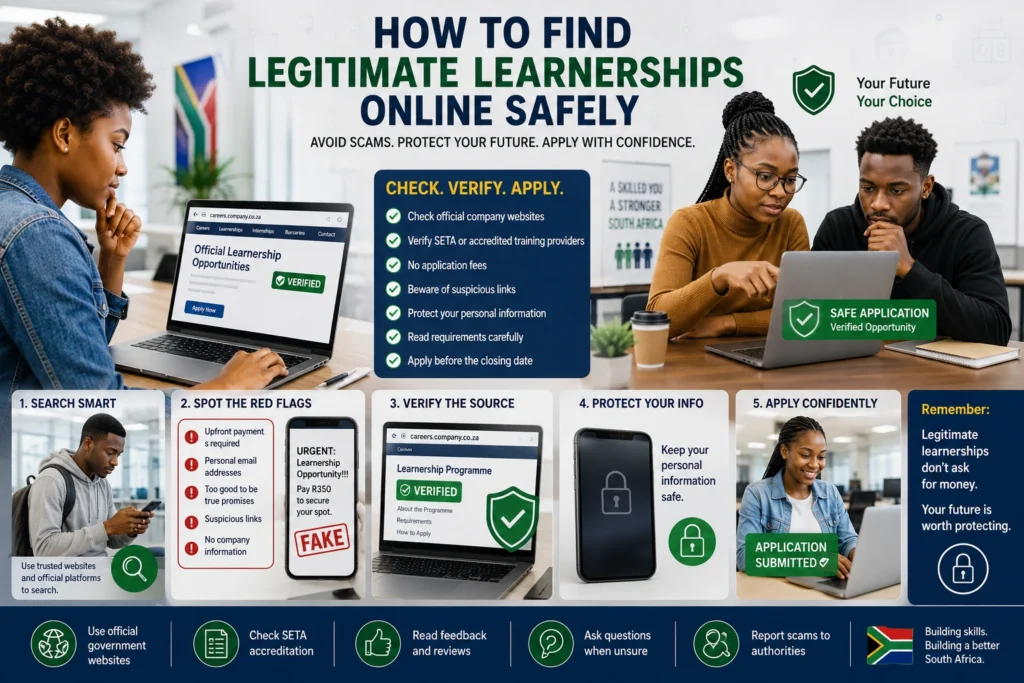
Social media platforms now play a major role in how young South Africans discover learnership opportunities. Facebook pages, TikTok creators, LinkedIn accounts and WhatsApp groups frequently share recruitment updates faster than traditional media.
However, this convenience creates serious verification problems.
Some pages repost genuine opportunities responsibly, while others publish misleading content purely to generate:
- Website traffic
- Advertising revenue
- Data collection
- Scam engagement
One common problem involves recycled adverts using outdated information. A learnership from previous years may continue circulating long after applications have closed.
Another issue involves fake “application links” redirecting users toward phishing websites designed to capture personal information.
To reduce risk, applicants should:
- Cross-check dates carefully
- Verify company details independently
- Avoid suspicious shortened links
- Research the publisher’s credibility
- Confirm whether the opportunity exists elsewhere online
Social media can still be useful for awareness, but it should never replace independent verification.
Why Professionalism Matters When Applying Online
Another overlooked aspect of finding legitimate learnerships online involves applicant behaviour itself.
Professional application practices improve both security and employability.
Candidates should:
- Use a professional email address
- Maintain updated CVs
- Avoid sharing unnecessary personal data
- Store certified documents securely
- Track application submissions carefully
Scammers often target applicants who respond impulsively without checking details thoroughly.
Professional applicants usually pause to evaluate:
- Application requirements
- Organisation legitimacy
- Contact details
- Website security
- Programme structure
This cautious approach reduces vulnerability to fraud.
Additionally, many employers increasingly evaluate digital professionalism during recruitment. Applicants who communicate clearly, follow instructions properly and use professional email etiquette may strengthen their chances during selection processes.
In a competitive labour market, digital professionalism has become part of employability itself.
Fake Learnership Trends Are Becoming More Sophisticated
A growing concern in 2026 is how advanced recruitment scams have become.
Fraudsters increasingly use:
- AI-generated graphics
- Copied company branding
- Fake interview letters
- Simulated HR conversations
- Professional-looking websites
Some scams even include fake reference numbers and fabricated employee names to appear credible.
This sophistication makes emotional decision-making more dangerous. Applicants should avoid applying immediately simply because an opportunity appears attractive.
Instead, job seekers should build a verification routine that includes: Find Legitimate Learnerships Online in South Africa
- Checking official company websites
- Confirming contact information
- Searching for recent announcements
- Reviewing accreditation details
- Looking for public scam warnings
As digital scams evolve, verification skills are becoming essential survival tools within South Africa’s online employment landscape.
The Importance of Digital Literacy for Young Job Seekers-Find Legitimate Learnerships Online in South Africa
The discussion around how to find legitimate learnerships online is ultimately part of a larger issue: digital literacy.
Modern job searching now requires more than submitting CVs. Young people increasingly need: Find Legitimate Learnerships Online in South Africa
- Online research skills
- Fraud awareness
- Verification techniques
- Professional communication ability
- Understanding of digital recruitment systems
Unfortunately, many first-time applicants receive little formal guidance on navigating online recruitment safely.
Schools and communities often focus heavily on academic achievement without teaching practical digital employability skills.
As a result, some applicants unknowingly expose themselves to scams because they lack experience evaluating online information critically.
Improving digital literacy may therefore become just as important as expanding learnership opportunities themselves.
What This Means Going Forward-Find Legitimate Learnerships Online in South Africa
The future of recruitment in South Africa will likely become even more digital. Employers increasingly rely on: Find Legitimate Learnerships Online in South Africa
- Online applications
- Digital assessments
- Automated recruitment systems
- Social media recruitment campaigns
At the same time, scammers are expected to continue exploiting high unemployment and information gaps.
This means the ability to identify legitimate opportunities will remain critically important for young job seekers.
Government departments, SETAs, schools and training organisations may eventually need to invest more heavily in: Find Legitimate Learnerships Online in South Africa
- Scam awareness campaigns
- Digital employability education
- Verification training
- Online safety programmes
For applicants themselves, caution and independent verification are becoming non-negotiable habits.
The most successful job seekers in the future may not simply be those who apply fastest, but those who apply strategically and safely.
Practical Tips to Stay Safe When Searching for Learnerships-Find Legitimate Learnerships Online in South Africa
Before applying for any online opportunity, applicants should: Find Legitimate Learnerships Online in South Africa
- Verify the employer independently
- Avoid paying any application fees
- Check official company websites
- Confirm accreditation details
- Research the training provider
- Avoid suspicious links
- Protect personal information
- Keep copies of applications submitted
Developing these habits can significantly reduce exposure to fraudulent recruitment schemes.
FAQs-Find Legitimate Learnerships Online in South Africa
How can I tell if a learnership is legitimate?
A legitimate learnership usually appears on an official company website, uses verified corporate contact details and does not request payment from applicants.
Are WhatsApp learnership adverts always fake?
Not always. Some WhatsApp groups share genuine opportunities, but applicants should still independently verify all information through official company or government platforms before applying.
Conclusion-Find Legitimate Learnerships Online in South Africa
Understanding how to find legitimate learnerships online has become increasingly important in South Africa’s evolving digital recruitment environment. While online platforms have improved access to opportunities, they have also created new risks for vulnerable job seekers.
The rise of sophisticated scams means applicants must approach every opportunity carefully, verify information independently and avoid emotionally driven decisions.
Legitimate learnerships remain valuable pathways toward skills development, workplace exposure and long-term employment. However, protecting personal information and avoiding fraudulent schemes is now an essential part of the application process itself.
For many young South Africans, digital awareness may become just as important as qualifications when navigating the future employment landscape.






Leave a Reply