
Discover the difference between permanent and temporary jobs in South Africa, including salary stability, benefits, flexibility, career growth and employment security. Learn which option may suit your long-term goals in 2026.
The modern job market is changing rapidly, and one of the biggest employment questions facing workers today is whether permanent jobs still offer better long-term security than temporary employment opportunities.
Across South Africa and globally, economic pressure, rising unemployment and changing workplace structures are reshaping how companies hire staff. Businesses increasingly rely on short-term contracts, freelance workers and temporary employment arrangements to remain flexible in uncertain economic conditions. At the same time, many workers continue pursuing permanent positions because of the stability, benefits and long-term career growth they often provide.
This shift has created growing debate around the real value of permanent versus temporary jobs. Younger workers entering the labour market sometimes prioritise flexibility and quick income opportunities, while others focus on job security, pension benefits and predictable career progression.
Understanding the difference between permanent and temporary jobs has therefore become more important than ever. The decision affects salary stability, financial planning, workplace rights, employee benefits and even long-term mental wellbeing.
As South Africa’s labour market becomes increasingly competitive and technology-driven, the distinction between these two employment structures is influencing how people build careers, manage risk and navigate uncertain economic conditions.
ALSO READ How to Apply for Learnerships in South Africa in 2026: A Step-by-Step Guide Most Applicants Miss
ALSO APPLY FOR Coega Internship Programme Intake 2026 Opens 24-Month Graduate Development Opportunities in High-Demand Fields
Quick Facts About Difference between permanent and temporary jobs
| Employment Information | Details |
|---|---|
| Permanent Job Duration | Ongoing employment |
| Temporary Job Duration | Fixed-term or short-term |
| Employment Security | Higher in permanent roles |
| Workplace Flexibility | Higher in temporary roles |
| Employee Benefits | More common in permanent jobs |
| Contract Type | Permanent or fixed-term |
| Closing Date | Not stated in the official advert |
| Location | Not stated in the official advert |
| Positions Available | Not stated in the official advert |
| Reference Number | Not stated in the official advert |
| Stipend | Not stated in the official advert |
| Required Gender | Not stated in the official advert |
| Name of the Company | Not stated in the official advert |
Understanding The Difference between permanent and temporary jobs
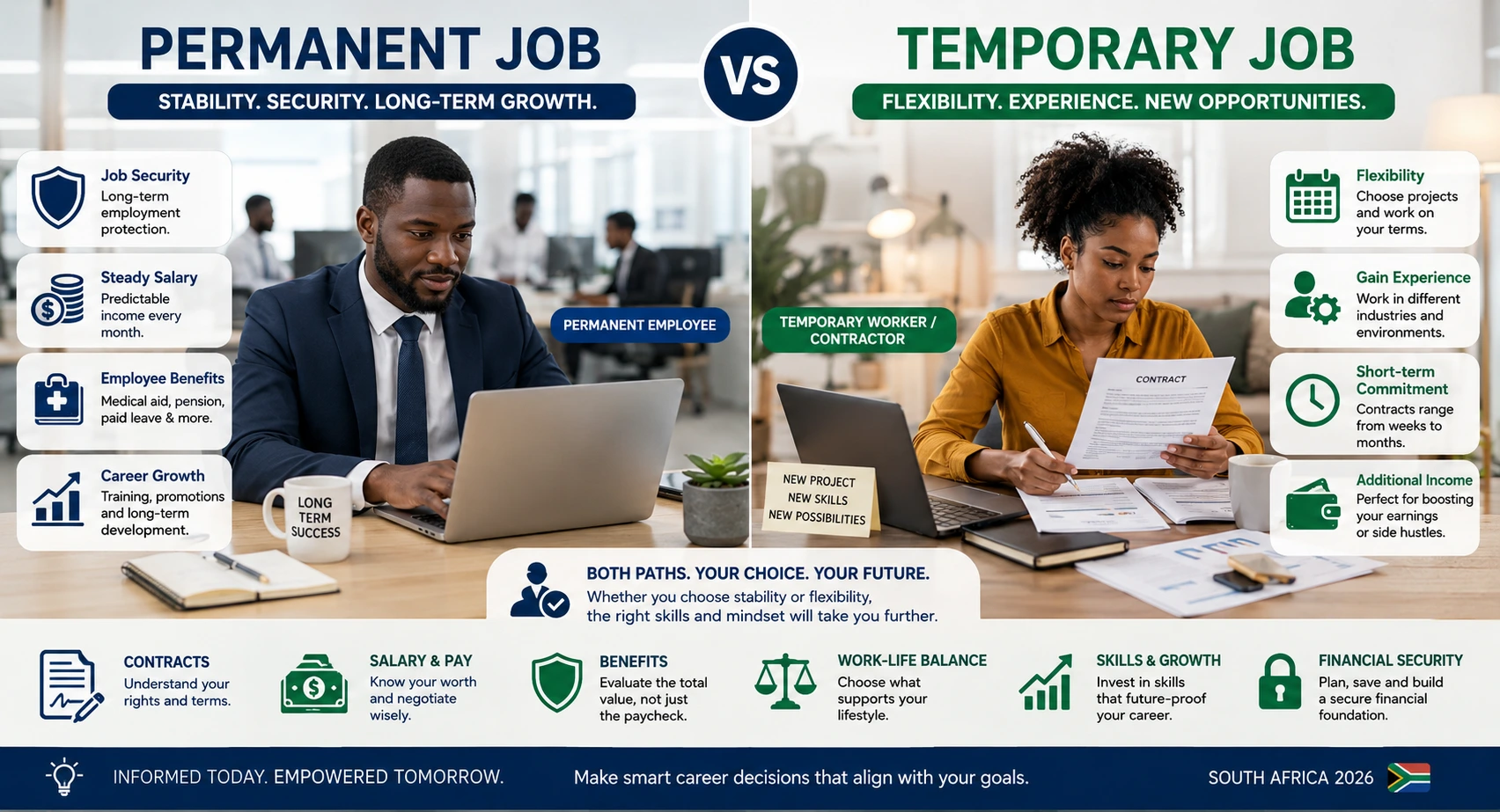
The main difference between permanent and temporary jobs lies in the duration and structure of employment.
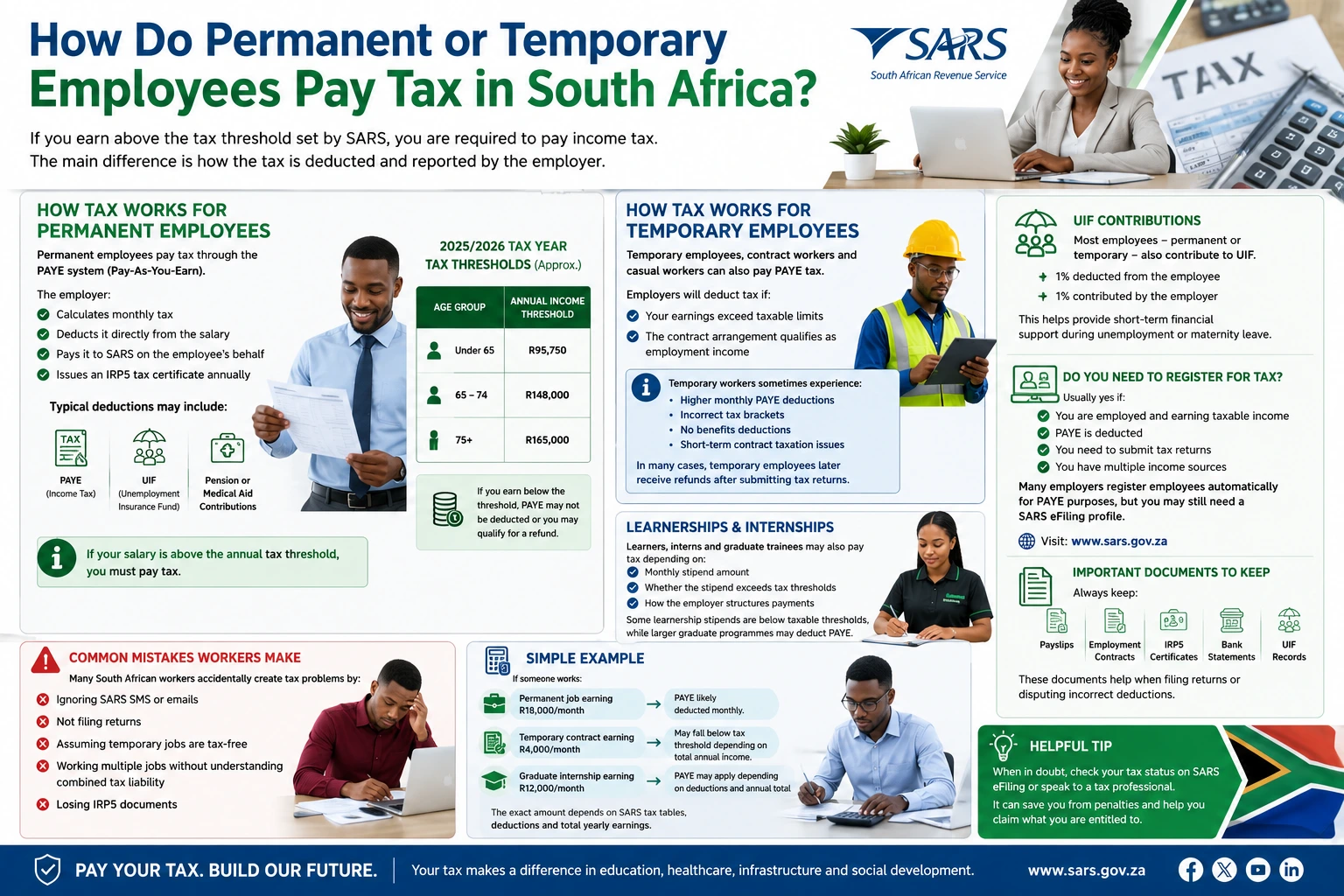
A permanent job usually has no fixed end date. Employees remain employed unless they resign, retire or are formally dismissed according to labour regulations.
Temporary jobs, however, are designed for limited periods. These positions may last: Difference between permanent and temporary jobs
- A few weeks
- Several months
- A fixed project duration
- Seasonal business periods
Temporary employment often exists to help organisations manage:
- Increased workloads
- Staff shortages
- Seasonal demand
- Special projects
- Budget limitations
Permanent employees are generally viewed as long-term organisational investments, while temporary workers are frequently hired to meet short-term operational needs.
This distinction affects more than contract length alone. It also influences: Difference between permanent and temporary jobs
- Workplace benefits
- Career progression
- Salary consistency
- Training opportunities
- Financial security
- Employee loyalty
As businesses adapt to uncertain economic environments, temporary employment models are becoming increasingly common across industries such as retail, logistics, hospitality, construction and administration.
However, permanent employment continues holding strong appeal because of the long-term stability it often provides.
Why Permanent Jobs Still Matter In An Uncertain Economy-Difference between permanent and temporary jobs
Despite the rise of flexible work arrangements, permanent jobs remain highly desirable for many South Africans.
One major reason is financial stability.
Permanent employees usually receive: Difference between permanent and temporary jobs
- Fixed monthly salaries
- Paid leave
- Pension contributions
- Medical aid support
- UIF contributions
- Long-term employment protection
This consistency makes budgeting and long-term financial planning easier.
In a country facing high unemployment and economic uncertainty, stable income often becomes more valuable than flexibility alone. Many workers prioritise permanent employment because it provides predictability during difficult economic periods.
Permanent roles also tend to offer stronger career development opportunities. Employers are often more willing to invest in:
- Staff training
- Leadership development
- Promotions
- Internal career progression
This creates pathways for long-term professional growth.
Another important factor is psychological security. Research globally has increasingly shown that employment stability can positively influence:
- Mental wellbeing
- Productivity
- Workplace confidence
- Financial decision-making
Workers who feel secure in their employment may experience lower financial stress compared to those constantly searching for new contracts or temporary assignments.
In South Africa’s competitive labour market, permanent employment is therefore often viewed not only as a job but also as a foundation for long-term personal stability.
Why Temporary Jobs Are Becoming More Popular
Although permanent jobs provide stability, temporary employment has grown significantly over the past decade.
Several economic and workplace trends are driving this shift.
Companies Want Flexibility
Businesses increasingly avoid long-term staffing commitments due to:
- Economic uncertainty
- Rising operational costs
- Changing market conditions
- Technology-driven restructuring
Temporary contracts allow companies to scale workforces up or down more easily.
Young Workers Prioritise Experience
Many graduates and first-time job seekers use temporary jobs to:
- Gain workplace experience
- Build CVs
- Develop skills
- Expand professional networks
For unemployed youth, temporary work can become an important entry point into formal employment.
Temporary Work Can Create Faster Income Opportunities
Permanent hiring processes are often slower and more competitive. Temporary roles may offer quicker access to income, especially in industries with high operational demand.
Flexibility Appeals To Some Workers
Certain workers prefer temporary jobs because they offer:
- Flexible schedules
- Project variety
- Exposure to different industries
- Freedom to change workplaces
This trend has grown alongside freelance and gig economy work models.
In sectors such as technology, media and consulting, short-term project-based employment is increasingly common and sometimes highly profitable.
The growing acceptance of temporary work reflects broader changes in how modern careers are developing. Traditional lifelong employment within one organisation is becoming less common globally.
The Financial Benefits And Risks Of Permanent Jobs
Permanent jobs are often associated with stronger financial security, but they also come with trade-offs.
Benefits Of Permanent Jobs
Stable Income
Employees generally receive predictable monthly salaries, making it easier to:
- Pay rent
- Qualify for loans
- Support families
- Manage long-term expenses
Employee Benefits
Permanent workers often receive:
- Medical aid
- Pension contributions
- Paid annual leave
- Sick leave
- Maternity benefits
These benefits can significantly improve overall financial wellbeing.
Career Growth Opportunities
Long-term employment may improve promotion opportunities and internal professional development.
Risks Or Limitations
Reduced Flexibility
Permanent roles sometimes involve:
- Fixed schedules
- Long-term commitments
- Limited freedom to explore different industries
Slower Salary Growth In Some Industries
Some permanent employees experience slower income increases compared to highly skilled contractors or consultants.
Workplace Dependency
Workers relying entirely on one employer may face significant disruption if retrenchment occurs.
Although permanent jobs remain attractive, modern workers increasingly recognise the importance of balancing stability with adaptability.
The Advantages And Challenges Of Temporary Employment
Temporary jobs are often misunderstood as unstable or low-value, yet they can offer important career advantages.
Benefits Of Temporary Jobs
Faster Entry Into The Workforce
Temporary work often provides immediate employment opportunities during difficult economic periods.
Skill Development
Workers may gain exposure to:
- Multiple industries
- Different organisational systems
- Various workplace environments
This can improve adaptability and versatility.
Networking Opportunities
Temporary workers frequently build professional connections across different companies and sectors.
Flexibility
Some workers value the freedom to:
- Change projects
- Work seasonally
- Pursue studies simultaneously
- Explore different career paths
Challenges Of Temporary Jobs
Income Instability
Temporary workers may experience gaps between contracts, creating financial uncertainty.
Fewer Benefits
Many temporary employees do not receive:
- Pension contributions
- Medical aid
- Paid leave
- Long-term employment protection
Limited Career Progression
Some organisations invest less in training temporary staff because contracts are short-term.
Despite these challenges, temporary work continues playing a major role within modern labour markets.
For many South Africans, temporary employment serves as an important stepping stone toward permanent opportunities later.
How Technology And The Gig Economy Are Reshaping Employment
Technology is rapidly changing the structure of employment globally.
Digital platforms now allow people to generate income through:
- Freelancing
- Online services
- Remote consulting
- App-based work
- Creative digital content
This has blurred traditional distinctions between permanent and temporary work.
Many professionals now combine:
- Contract work
- Freelance projects
- Part-time employment
- Entrepreneurship
Rather than depending entirely on one employer.
Companies also increasingly rely on flexible talent models to reduce operational costs and improve scalability.
As automation and artificial intelligence continue reshaping industries, adaptability may become one of the most important workplace skills.
Workers who can navigate both permanent and temporary employment environments may remain more competitive in evolving labour markets.
This does not necessarily mean permanent jobs will disappear. Instead, employment structures are becoming more diverse and flexible than in previous decades.
What This Means Going Forward
The difference between permanent and temporary jobs is likely to remain one of the most important employment discussions in South Africa’s future labour market.
Several trends are becoming increasingly clear:
Temporary Work Will Continue Growing-Difference between permanent and temporary jobs
Economic uncertainty and operational flexibility are encouraging businesses to expand short-term hiring models.
Permanent Jobs Will Still Be Highly Valued-Difference between permanent and temporary jobs
Stable employment, benefits and predictable income will continue attracting workers seeking financial security.
Adaptability Will Become Essential-Difference between permanent and temporary jobs
Workers may increasingly move between: Difference between permanent and temporary jobs
- Permanent employment
- Contract work
- Freelancing
- Entrepreneurial activity
Throughout their careers.
Skills May Matter More Than Job Type-Difference between permanent and temporary jobs
Employers increasingly prioritise: Difference between permanent and temporary jobs
- Technical ability
- Communication skills
- Digital literacy
- Problem-solving
- Workplace adaptability
Regardless of employment structure.
Younger Workers May Redefine Career Success-Difference between permanent and temporary jobs
Future generations may value flexibility, work-life balance and project variety more than traditional long-term corporate employment.
Ultimately, both permanent and temporary jobs offer unique advantages depending on individual goals, financial circumstances and career priorities.
The modern workforce is no longer shaped by one single employment model. Instead, career success increasingly depends on how effectively workers adapt to changing economic realities while building sustainable professional skills.
FAQs About Difference between permanent and temporary jobs
Which is better: a permanent or temporary job?
Neither is automatically better. Permanent jobs usually provide greater stability and benefits, while temporary jobs may offer flexibility, faster hiring opportunities and broader workplace exposure.
Can a temporary job become permanent?
Yes. Many employers use temporary contracts to evaluate workers before offering permanent employment opportunities based on performance and operational needs.
Conclusion-Difference between permanent and temporary jobs
The debate between permanent and temporary jobs reflects much larger changes happening within South Africa’s labour market and the global economy.
Permanent employment continues offering important advantages such as stability, predictable income and long-term career development. At the same time, temporary jobs are becoming increasingly important because they provide flexibility, rapid employment access and exposure to diverse workplace environments.
As economic conditions evolve and technology reshapes employment structures, workers are likely to experience more varied career paths than previous generations. Understanding the strengths and limitations of both employment models may therefore help individuals make more informed financial and professional decisions.
Rather than viewing one option as universally superior, the modern workforce increasingly requires adaptability, strategic career planning and the ability to navigate changing employment opportunities effectively.







Leave a Reply