
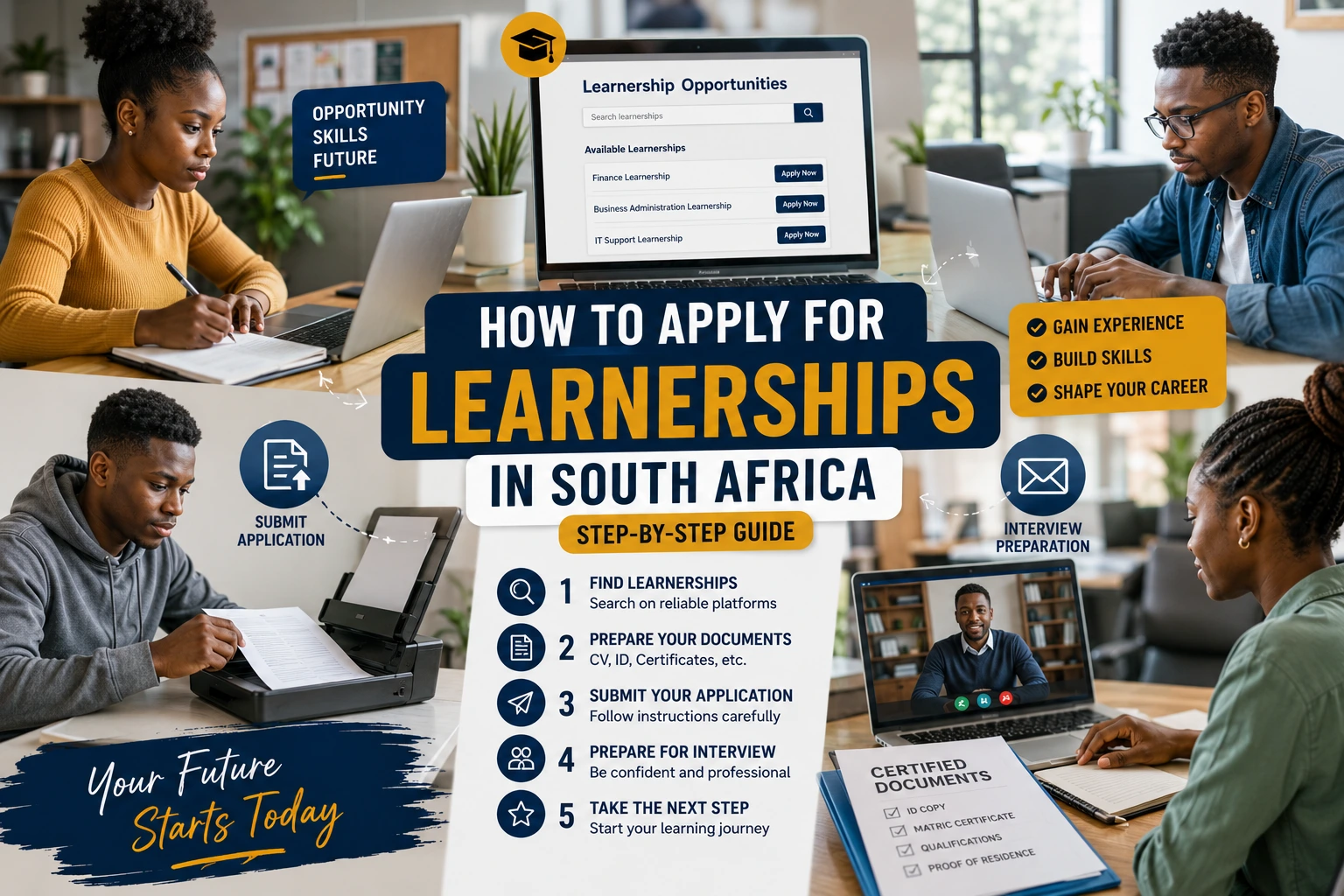
Learn how to apply for learnerships in South Africa step-by-step in 2026. Discover application tips, required documents, common mistakes and how to improve your chances of selection.
How to Apply for Learnerships in South Africa (Step-by-Step)
For thousands of unemployed South Africans, learnerships have become one of the most important pathways into workplace experience, skills development and potential long-term employment. As competition for entry-level opportunities intensifies in 2026, understanding how to apply for learnerships correctly is becoming just as important as meeting the minimum requirements.
Many applicants fail before the recruitment process even begins. Incomplete applications, missing documents, poor CV formatting and misunderstanding application instructions continue preventing qualified candidates from being shortlisted. At the same time, employers are increasingly using digital recruitment systems that automatically filter out incorrect submissions.
This means applying for learnerships is no longer simply about sending a CV. Successful applicants often follow structured preparation strategies, understand employer expectations and tailor their applications carefully.
This guide explains the full learnership application process in South Africa, including how to prepare documents, where to find legitimate opportunities, common mistakes to avoid and what employers are really looking for during recruitment.
ALSO READ How Learnership Programmes Help South African Employers Build Skills and Reduce Hiring Costs 2026
ALSO APPLY FOR General Worker x7 Jobs in Gqeberha Closing Soon: Why Feed Milling Roles Are Becoming More Important in South Africa’s Industrial Sector
Quick Facts Box About How to Apply for Learnerships in South Africa in 2026
| Information | Details |
|---|---|
| Closing Date | Varies by learnership programme |
| Location | South Africa |
| Duration | Usually 6–24 months |
| Positions Available | Depends on employer |
| Reference Number | Varies by advert |
| Stipend | Only if officially stated in the advert |
| Required Gender | Usually open to all genders unless specified |
| Name of the Company | Depends on the learnership provider |
Why Learnership Applications Have Become More Competitive-How to Apply for Learnerships in South Africa in 2026
The demand for learnerships has grown significantly over the past few years. South Africa’s unemployment rate, particularly among young people, has pushed more matriculants, TVET graduates and unemployed graduates toward workplace training programmes.
At the same time, companies increasingly use learnerships to identify future employees while also meeting skills development objectives. This creates a situation where thousands of applicants compete for limited intake spaces.
In many large recruitment drives, employers receive tens of thousands of applications for only a few hundred positions. Because of this, recruiters often eliminate candidates quickly based on small administrative mistakes.
The modern application process therefore rewards candidates who are organised, accurate and professionally prepared.
Step 1: Understand What the Learnership Requires-How to Apply for Learnerships in South Africa in 2026
Before applying, applicants should carefully read the entire learnership advert instead of focusing only on the application email address or closing date.
Every programme has specific requirements depending on the industry and qualification level. Common requirements may include:
- Grade 12 certificate (Matric)
- South African ID
- Updated CV
- Relevant qualification
- Proof of residence
- Driver’s licence (for some programmes)
- Computer literacy
- Communication skills
- Age requirements
- Employment Equity preferences
Some learnerships target unemployed youth specifically, while others may focus on graduates, people living with disabilities or candidates from particular provinces.
Understanding these details is essential because applying for programmes without meeting the minimum requirements usually wastes time and may negatively affect future applications with the same employer.
Applicants should also pay attention to whether the programme offers:
- Accredited training
- Workplace experience
- Potential permanent employment
- Industry-recognised qualifications
These factors often determine the long-term value of the learnership.
Step 2: Prepare a Professional Learnership CV-How to Apply for Learnerships in South Africa in 2026
A strong CV remains one of the most important parts of any learnership application.
Many applicants make the mistake of using complicated CV templates filled with unnecessary graphics, colours or long paragraphs. Most recruiters prefer clean, simple and easy-to-read CVs.
A learnership CV should typically include:
Personal Information
Include:
- Full name
- Contact number
- Professional email address
- Residential area
- ID number (optional depending on preference)
Educational Background
List:
- Highest qualification
- School or institution
- Subjects
- Completion year
Skills
Examples include:
- Microsoft Office
- Communication skills
- Teamwork
- Problem-solving
- Customer service
- Computer literacy
Work Experience
Even if applicants do not have formal employment history, they can include:
- Volunteer work
- Community projects
- School leadership
- Informal work
- Internship experience
References
If available, include teachers, lecturers or supervisors who can verify character and reliability.
Recruiters often spend less than a minute reviewing entry-level CVs. Clear structure and readability therefore matter more than excessive detail.
Step 3: Gather All Required Supporting Documents-How to Apply for Learnerships in South Africa in 2026
One of the most common reasons applications fail is missing documentation.
Most learnership applications require certified copies of supporting documents. These usually include:
- South African ID
- Matric certificate
- Academic transcripts
- Additional qualifications
- Driver’s licence (if required)
- Proof of residence
- Disability confirmation documents (if applicable)
Applicants should ensure documents are:
- Clearly scanned
- Easy to read
- Properly certified if requested
- Saved in acceptable formats such as PDF
File naming also matters more than many people realise. Recruiters handling large volumes of applications prefer organised submissions.
Professional file examples:
- Thabo_Mokoena_CV.pdf
- Thabo_Mokoena_ID.pdf
- Thabo_Mokoena_Matric.pdf
Poorly named files can create confusion during screening processes.
Step 4: Apply Through Official Platforms Only-How to Apply for Learnerships in South Africa in 2026
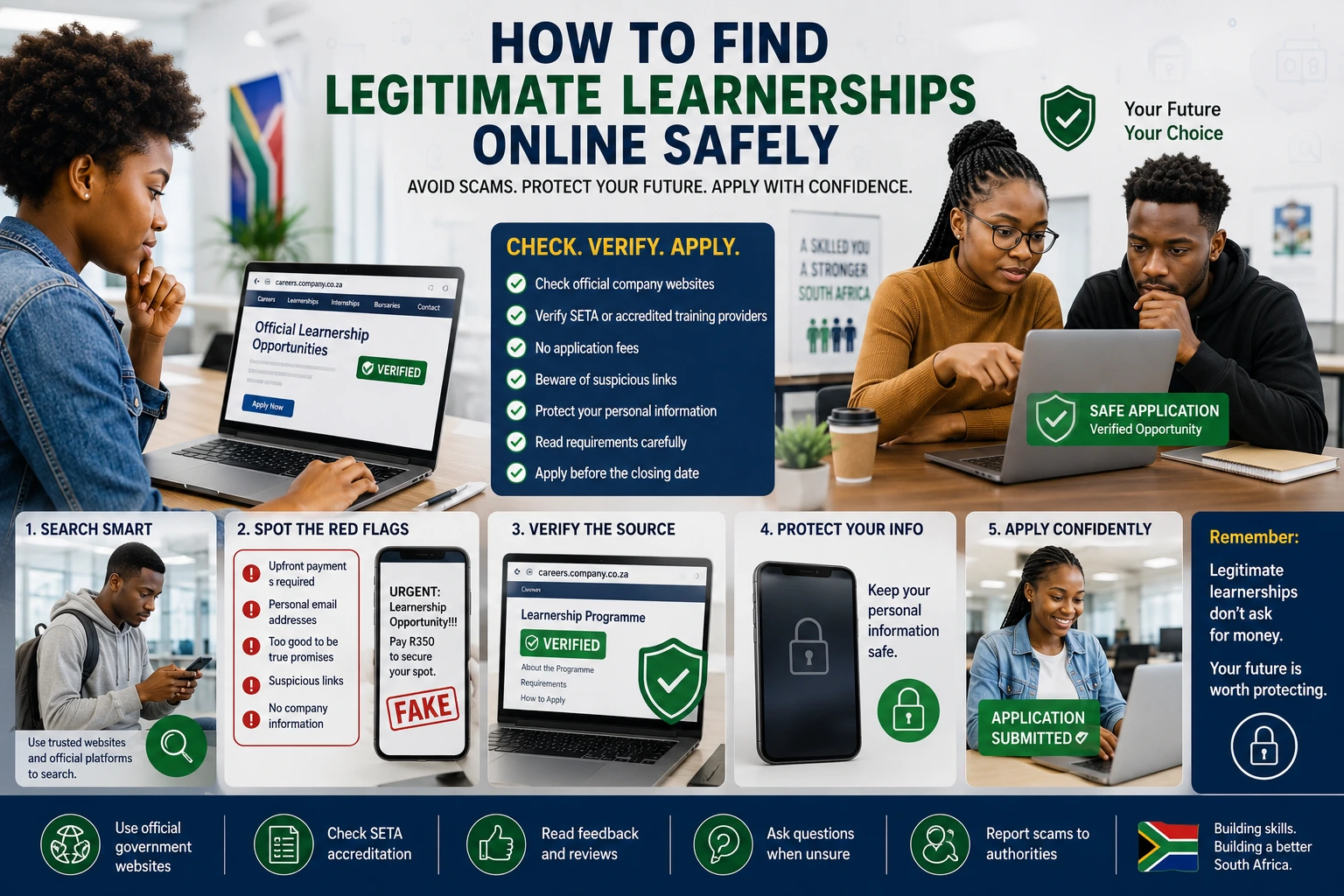
As learnership popularity increases, online scams and fake recruitment adverts have also become more common.
Applicants should prioritise legitimate sources such as:
- Official company websites
- Verified LinkedIn pages
- SETA websites
- Reputable recruitment portals
- Government employment platforms
Warning signs of fake learnership adverts include:
- Requests for payment
- Suspicious WhatsApp-only recruitment
- Poor spelling and grammar
- Unverified social media pages
- Promises of guaranteed employment
Real employers do not charge application fees for learnership opportunities.
Applicants should also verify email domains carefully. Legitimate corporate recruitment emails usually use official company domains rather than free personal email services.
Step 5: Write a Proper Application Email-How to Apply for Learnerships in South Africa in 2026
A poorly written email can damage an otherwise strong application.
The email should remain professional, concise and clear.
A good application email usually includes:
- The learnership title
- Reference number if provided
- Short introduction
- Mention of attached documents
- Professional closing
Example structure:
Subject Line:
Application for Finance Learnership 2026 – Reference FIN2026
Email Body:
Dear Recruitment Team,
Please find attached my application for the Finance Learnership Programme 2026. I have included my CV, certified ID copy and educational documents for consideration.
Thank you for your time and consideration.
Kind regards,
Applicant Name
Professional communication creates a stronger first impression.
Step 6: Follow Instructions Exactly-How to Apply for Learnerships in South Africa in 2026
Many employers automatically reject applications that ignore instructions.
Examples include:
- Wrong subject line
- Missing reference number
- Incorrect file format
- Late submissions
- Missing attachments
- Applying through incorrect channels
Recruiters often use these instructions to measure attention to detail and professionalism.
If an advert requests PDF files only, applicants should avoid sending screenshots or image formats unless specifically requested.
If an online portal is required, sending applications by email may lead to automatic disqualification.
Small administrative mistakes continue eliminating thousands of applicants every year.
Step 7: Prepare for Assessments and Interviews-How to Apply for Learnerships in South Africa in 2026
Shortlisted learnership candidates may undergo:
- Interviews
- Online assessments
- Aptitude tests
- Psychometric testing
- Group activities
Employers increasingly assess: How to Apply for Learnerships in South Africa in 2026
- Communication ability
- Professionalism
- Problem-solving
- Reliability
- Workplace readiness
Candidates should prepare by researching:
- The company
- The industry
- The programme structure
- Common interview questions
Strong preparation often separates shortlisted candidates from unsuccessful applicants.
Professional appearance, punctuality and confidence also influence recruitment decisions heavily during learnership interviews.
Common Mistakes That Reduce Your Chances-How to Apply for Learnerships in South Africa in 2026
Many applicants unknowingly weaken their own applications through avoidable errors.
Common mistakes include:
- Applying without reading requirements
- Using unprofessional email addresses
- Sending blurry documents
- Copying generic CVs
- Submitting incomplete applications
- Missing deadlines
- Ignoring instructions
- Applying for every programme without relevance
Quality applications usually perform better than mass applications sent without preparation.
Recruiters increasingly look for candidates who demonstrate genuine interest, organisation and professionalism rather than desperation alone.
What This Means Going Forward-How to Apply for Learnerships in South Africa in 2026
The learnership recruitment landscape in South Africa is evolving rapidly as employers adopt more digital hiring systems and workplace expectations continue changing.
Several major trends are becoming clear in 2026: How to Apply for Learnerships in South Africa in 2026
Digital Applications Are Becoming Standard-How to Apply for Learnerships in South Africa in 2026
More employers now use online portals, applicant tracking systems and automated screening tools. Applicants with strong digital literacy skills may gain advantages.
Soft Skills Matter More-How to Apply for Learnerships in South Africa in 2026
Communication, professionalism and adaptability increasingly influence selection decisions, even for entry-level programmes.
Competition Will Continue Increasing-How to Apply for Learnerships in South Africa in 2026
As economic pressures persist, demand for learnership opportunities will likely remain extremely high across industries.
Skills-Based Hiring Is Expanding-How to Apply for Learnerships in South Africa in 2026
Employers increasingly prioritise practical ability and workplace readiness rather than qualifications alone.
Applicants Must Become More Strategic-How to Apply for Learnerships in South Africa in 2026
Candidates who tailor applications carefully and apply selectively may achieve better success rates than those sending generic applications everywhere.
The future of learnership recruitment will likely favour applicants who combine technical preparation with professional presentation.
FAQs-How to Apply for Learnerships in South Africa in 2026
Do you need matric to apply for learnerships?
Not always. Some learnerships require Grade 12, while others accept lower qualifications depending on the industry and programme level.
Are learnership applications free in South Africa?
Yes. Legitimate learnership applications are free. Employers should never ask applicants to pay recruitment or placement fees.
Conclusion-How to Apply for Learnerships in South Africa in 2026
Applying for learnerships in South Africa has become far more competitive and professional than many applicants realise. Success now depends not only on qualifications but also on preparation, organisation and attention to detail.
Applicants who carefully read requirements, prepare strong CVs, submit complete documentation and communicate professionally often improve their chances significantly. At the same time, understanding the realities of the recruitment process helps applicants approach opportunities more strategically.
While no learnership guarantees permanent employment, these programmes continue offering valuable workplace exposure, accredited training and career development opportunities for thousands of South Africans entering the labour market.





Leave a Reply